Advisory Board
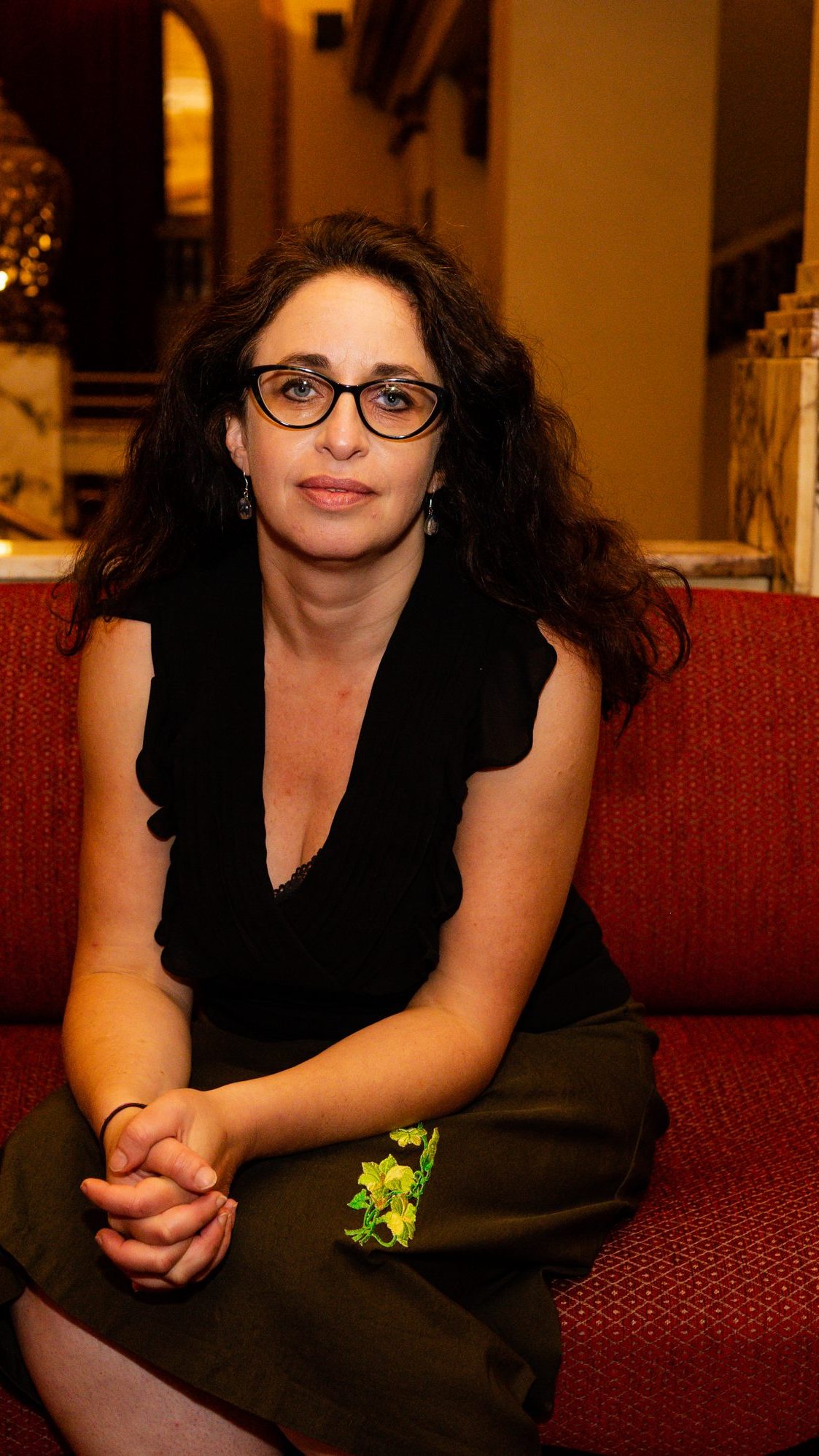
Maria Tumarkin is a Ukrainian-Jewish-Australian writer and cultural historian born and raised in Kharkiv. She writes books, essays, reviews, and pieces for performance and radio; she collaborates with sound and visual artists and has had her work carved into dockside tiles. Maria is the author of four books of ideas: Traumascapes, Courage, Otherland and Axiomatic.
In Traumascapes, Tumarkin argues that physical sites of violence and loss in different parts of the world are a distinctive category of places transformed physically and psychically by suffering and loss. In the last few decades, they have emerged as places of undeniable power and vast cultural (and transcultural) significance.
In a nutshell,
* Traumascapes can elicit, shape, and sustain remembering.
* Traumascapes can crystallise identities and meanings.
* Traumascapes can enable and anchor public and private expressions of grief.
* Traumascapes can create communities and publics – often communities of survivors, but also communities of mourners.
* Traumascapes can act as focal points or catalysts for truth-seeking and justice-seeking.
* Traumascapes can emerge as cathartic locations.
* Traumascapes can become portals for individual experiences of shame, brutalisation, loss of meaning, and humiliation, to become reconfigured as socially shared experiences.
* Traumascapes can transfer and externalise the burden of memory carried by survivors.
Recently, Tumarkin has been writing and thinking about sites of conscience as distinct from both sites of memory and sites of trauma. Sites of conscience are distinguished by their ability to move us “from memory to action” (International Coalition website), from isolation to community, from social invisibility to cultural legitimacy, from looking away to looking at, from neglect to vitality, and, finally, from safely in the past to powerfully and palpably present.
Tumarkin’s most recent book, Axiomatic, is a fusion of thinking, storytelling, reportage and meditation. It takes as its starting point five axioms: ‘Time Heals All Wounds’; ‘History Repeats Itself…’; ‘Those Who Forget the Past are Condemned to Repeat It’; ‘Give Me a Child Before the Age of Seven and I’ll Give You the Woman’; and ‘You Can’t Enter The Same River Twice.’ These beliefs—or intuitions—about the role the past plays in our present are often evoked as if they are timeless and self-evident truths. It is precisely because they are neither, yet still we are persuaded by them, that they tell us a great deal about the forces that shape our culture and the way we live. Axiomatic won the 2018 Melbourne Prize for Literature and was shortlisted for the National Book Critics Circle Award (US), the Stella Prize, and the Prime Minister’s, NSW and Victorian Premiers’ Awards. It was named a New Yorker Top 10 Book of 2019.
Maria is a recipient of the 2020 Windham Campbell Prize in the nonfiction category. She holds a PhD in cultural history from the University of Melbourne where she teaches in the creative writing program.
 Centre for the Sciences of Place and Memory