Advisory Board
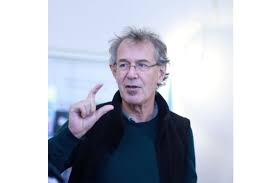
Nicholas Evans investigates linguistic diversity, especially of fragile and endangered languages, and what this tells us about the nature of language, culture, deep history, and human creativity. He has carried out extensive fieldwork on Aboriginal languages of Northern Australia (Kayardild, Bininj Kunwok, Dalabon, Iwaidja) and Papua New Guinea (Nen, Idi), and is interested in all aspects of language, from questions of grammar-writing, linguistic typology, translation and historical linguistics. The central role of language in the transmission of culture has also led him, as an interpreter and cultural advocate, to work in the area of Native Title Claims and of Aboriginal Art. Words of Wonder: What Endangered Languages Tell Us (2nd Edition, Wiley, 2020), has been translated into French, German, Korean, Japanese, and Chinese.
His more than 230 scientific publications, include seven monographs (grammars of the Australian languages Kayardild and Bininj Gunwok, dictionaries of the Australian languages Kayardild and Dalabon and the Papuan language Nen), and nine edited books. Among these are Archaeology and Linguistics: Global Perspectives on Ancient Australia (1997, with Pat McConvell), The non-Pama-Nyungan languages of northern Australia: comparative studies of the continent’s most linguistically complex region (2003), Catching language: the standing challenge of grammar-writing (2006, with Felix Ameka and Alan Dench), Reciprocals and Semantic Typology (2011, with Alice Gaby, Stephen Levinson & Asifa Majid), Insubordination (2014, with Honore Watanabe) and The Oxford Guide to Polysynthesis (2017, with Michael Fortescue and Marianne Mithun). Soon to appear, coedited with Sebastian Fedden, is the Oxford Guide to the Papuan Languages.
Multiple pathways have led to his interest in the intersection of language, memory and place, including the role of endangered languages in transmitting cultural memory, the fact that many of his teachers insist on remembering and recording specific knowledge ‘on country’, a long-standing interest in the mnemonic function of Indigenous place names, culture-specific practices for using place to track memory, and semantic questions of how memory itself is talked about across languages.
He has taught a wide range of courses, including at the Australain National University, University of Melbourne, Universität zu Köln, and Università degli Studi, Pavia, plus intensives in Mexico, Guatemala, Argentina, Italy, UK, USA, France, Indonesia, Russia and Peru. Topics have ranged from linguistic typology, semantics, field methods, historical linguistics, lexicography and sociolinguistics, language specific-courses on Australian and Papuan languages, and specialised courses on the evolution of linguistic diversity, reciprocals, social cognition, polysynthetic languages, and the synthesis of linguistics, archaeology, genetics and other fields of the deep human past.
Distinguished Professor in Linguistics at the Australian National University, he received an ARC Laureate Professorship for his project The Wellsprings of Linguistic Diversity, and for 2014-2023 he directed the Australian Research Council Centre of Excellence for the Dynamics of Language (CoEDL). He is a member of the Australian Academy of the Humanities, the Australian Social Sciences Academy and the British Academy, an Honorary Life Member of the Linguistics Society of America, a recipient of the Anneliese Maier Forschungspreis and of the Ken Hale Award from the Linguistics Society of America.
 Centre for the Sciences of Place and Memory