Advisory Board
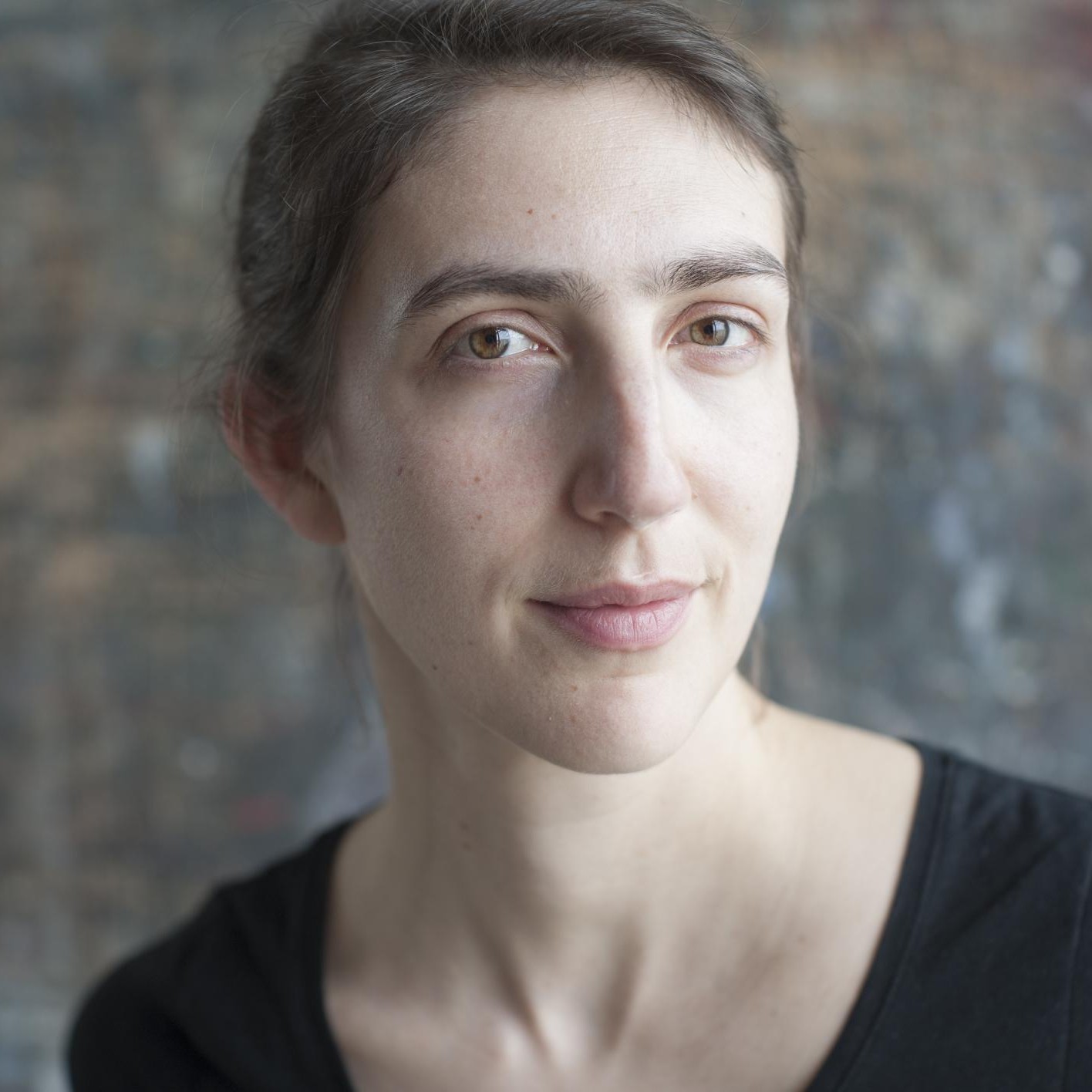
Sarah is a full research professor in political science, a sociologist of memory and an historian of the Holocaust at French National Center for Scientific Research (CNRS) and Sciences Po Paris. She is one of the former presidents of the Memory Studies Association. The relation between space and memory has been at the core of her work since the beginning from the study of its interaction in Maurice Halbwachs work to one of the grassroots memorialization of 2015 terrorist attacks in the streets of Paris.
She is the author or co-author of fifteen books on political science, sociology or history, including in English: The Covid-19 Pandemic and Memory. Remembrance, commemoration, and archiving in crisis edited with Orli Fridman, Palgrave, 2024; De-Commemoration. Removing statues and renaming streets, edited with Jenny Wustenberg, Berghahn Books, 2023 (translated into French with Fayard, 2023); Administrations of Memory. Transcending the Nation and Bringing back the State in Memory Studies, edited with Sara Dybris McQuaid, Springer, 2022 ; Beyond Memory. Can we really learn from the past ?, with Sandrine Lefranc, Palgrave, 2020 (translated from French, and also translated in Arabic and Spanish) ; Memory on my doorstep. Chronicles of the Bataclan Neighborhood (Paris, 2015-2016), Leuven University Press, 2019; Witnessing the Robbing of the Jews. A Photographic Album, Paris 1940-1944, Indiana University Press, 2015 and National Policy, Global Memory. The Commemoration of the Righteous among the Nations from Jerusalem to Paris, Berghahn Books, 2016.
Sarah ’s current work of focuses on the transformation of the state – through the study of public policies in the field of memory. She is particularly interested in the interactions between bureaucracy, normativity and expertise in the mobilization of the past in contemporary society, at local, national and global scales. Upstream, the aim is to study the emergence and functioning of memory administrations, their networks of experts and their professionals in order to understand the contemporary transformations of the welfare state. Downstream, Sarah explores new methodologies in order to break with an approach centered on the study of the narratives of the past, which is at the heart of most international work on memory, and to shift the focus from the effectiveness of a transmission of the past to the relationship of citizens to the very principle of these policies of memory and their policy feedback.
The second group of research that Sarah conducts is more sociological and concerns the social and institutional frameworks of documentality that mark the contemporary period and the transformation of cultural and heritage institutions that accompany it. In recent years, calls for “participation” by the “public” in order to preserve, in the present and “for the future”, the traces of the past have multiplied. Her most recent research has focused on the ways in which people keep track of and document periods of crisis (World War II, terrorist attacks and Covid), and the way State, local governments and administrations have taken growingly us these “participatory archives” as a tool for the governance of crises and transitions.
Finally, Sarah is also a historian of the Holocaust and a specialist in the implementation of anti-Semitic persecutions at the scale of Paris, from a spatial perspective.
 Centre for the Sciences of Place and Memory