
A hybrid workshop on the neglected distinction between space and place — and what’s lost when disciplines like memory studies, cognitive science and environmental psychology gloss over it.
Date: Wednesday 16 September 2026
Time: 10.15am–6pm
In person: Cottrell Building, room 2A13, University of Stirling
Online: Microsoft Teams; joining link sent after registration
In-person registration closes Friday 11 September 2026. Online registration remains open.

Overview
Space and place play an important, if under-theorised, role across many of the disciplines studying the human mind. The distinction between place and space has been a central concern in phenomenology and human geography, but it is often glossed over in disciplines such as memory studies, cognitive science and environmental psychology. The aim of this interdisciplinary workshop is to critically assess the dangers of focusing on space to the detriment of place, as well as topological notions such as inside/outside or internality/externality, and the tension between spatialisation and relationality.
The workshop takes place on the occasion of Jeff Malpas’s visit to the Centre for the Sciences of Place and Memory. Jeff Malpas will give the opening keynote.
Keynote speaker
Jeff Malpas

Jeff Malpas FAHA is an Australian philosopher and Emeritus Distinguished Professor at the University of Tasmania in Hobart. He was founder and, until 2005, Director of the university’s Centre for Applied Philosophy and Ethics. He is the author or editor of more than 20 books with some of the world’s leading academic presses and has published over 120 scholarly articles on topics in philosophy, art, architecture and geography.
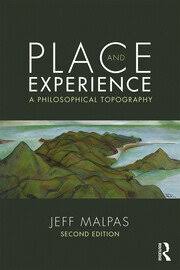
His work draws on the thinking of a diverse range of thinkers including, most notably, Albert Camus, Donald Davidson, Martin Heidegger and Hans-Georg Gadamer. Much of his work focuses on the idea of place and on the character of human being as standing in an essential relation to place, leading to the characterisation of his work as a mode of ‘philosophical topography’. Among his best-known works is Place and Experience: A Philosophical Topography, and his most recent book is In the Brightness of Place: Topological Thinking in and after Heidegger.
Programme
10.15–11.15am — Opening keynote
Jeff Malpas, University of Tasmania
11.15–11.30am — Break
11.30am–12.15pm — Sensing Place, Moving through Space in Palestine-Israel
Kelly Luisa Gandolfo, University of Aberdeen
12.15–1pm — Expanse of Sky: The Centrality of the Damascene Ard Dyar to Syrian Collective Memory
Nour Halabi, University of Aberdeen
1–2.30pm — Lunch
The extended lunch interval allows in-person participants to attend
Jess Holdengarde and Morwenna Kearsley: Darkroom Dialogues,
1.30–2.15pm in the Pathfoot Building at the Macrobert Arts Centre, as part of Stirling Photography Festival.
2.30–3.15pm — Shaping Affective Heritage: Place-Making and Religious Coexistence in Primary Education
Christos Kakalis &
George Tsourous, Newcastle University
3.15–4pm — Inside Looking Outward: Unflattening Pedagogy as a Topology of Enabling Space and Place
Vladan Sutanovac, University of Vienna
4–4.30pm — Break
4.30–5.15pm — Place in Perfume
Siying Jiao, University of York
5.15–6pm — Holding Place: Polaroid Photography as a Method of Encounter
John Post &
Neil Crawford, University of Stirling
Abstracts
Sensing Place, Moving through Space in Palestine-Israel
Kelly Luisa Gandolfo, University of Aberdeen
In recent years there has been an increasing focus on space and place in memory studies, with studies examining Palestine (Gandolfo 2025a; 2025b), Pakistan (Mughal 2023), and refugee camps in Algeria, Lebanon, and Syria (Fiddian-Qasmiyeh 2020). While efforts are made to distinguish between places and sites, and unpack the significance of space and spatiality, less discussed is the distinction between space and place as embodied and sensory memory experiences.
This paper adopts Yi-Fu Tuan’s (2001 [1977]) and Jeff Malpas’s (2018) understandings of ‘space’ and ‘place’, with the former located as a physical site: one where people might live, work and play, all the while bound (or fortified) in the land- or cityscape that surrounds them, whether by buildings, walls, forests or the sea. Place, on the other hand, is distinguished by its ‘openness’ (Malpas 2018, 25) and can be shaped by the senses and narratives associated with a space. This dynamic (and subjective [Malpas 2018]) aspect opens it to conflicting as well as comforting feelings.
In his reflection on place, Edward Said observed the possibilities for places to be ‘manipulated, invented, characterized quite apart from a site’s merely physical reality’ (Said 2000, 180). Place is, then, paradoxically static and in flux, depending on the individual; two people might gaze on the same space, but view it in different ways, politically, historically and culturally. In the context of memory in Palestine-Israel, the physicality of space combines with the symbolism of place, ever-fluctuating through the shifting boundaries that bind the spaces and/or individual subjectivity. As digital cartography gains pace, this paper explores how sensory experiences and embodied im/mobility help to untangle space and place, while questioning whether digital cartography suggests an alternative way of experiencing space and place online.
Expanse of Sky: The Centrality of the Damascene Ard Dyar to Syrian Collective Memory
Nour Halabi, University of Aberdeen
Reflecting on the experience of exile, migration and unanticipated return, this paper adopts a reflexive auto-ethnographic perspective to grasp the phenomenological aspect of embodied life in urban contexts (Adams et al., 2015; Pierce & Lawhon, 2015, p. 655), and particularly the way Syrian immigrants experience sheltered outdoor ‘slices of sky’ that recall the courtyard of Syrian homes. The auto-ethnographic approach’s ‘emphasis on examining personal experiences through internal reflection and sense-making’ (Tarisayi, 2023, p. 55) allows Halabi to examine the complex multi-layered immigrant experience that dialogically places adopted and ancestral homes in conversation.
Drawing on Pierre Nora’s theory of lieu de memoire alongside postcolonial theories on material culture and belonging in Britain and the Global North (Agyeman, 1989; Ahmed et al., 2003; Tolia-Kelly, 2004), Halabi argues that the Damascene Ard Dyar central to courtyard homes of Old Damascus is not only a valued feature of Syrian urban geography that enables exposure to daylight and night skies while remaining sheltered from the elements, but also a sensory lieu de memoire whose components act as signifiers of home in exile. These sheltered outdoor spaces are central to enhancing the home-building and belonging of Syrian immigrants in adopted cities across the Global North.
Shaping Affective Heritage: Place-Making and Religious Coexistence in Primary Education
Christos Kakalis &
George Tsourous, Newcastle University
This paper examines how immersive, embodied teaching methods can help overcome social and cultural differences while fostering pluralistic, democratic and inclusive ways of being together. It analyses how memory contributes to translating research on religious coexistence, rooted in shared sites and faith practices, into place-making learning activities for primary education in the United Kingdom. Drawing on ongoing research on interfaith engagement at the School of Architecture, Planning and Landscape (SAPL), Newcastle University, in collaboration with Religions for Peace UK (RfPUK), this paper traces how these insights have been translated into pedagogical resources and tested through pilot sessions in London (July 2025) and Edinburgh (January 2026).
The teaching methods employ a range of artistic and multimodal approaches, including storytelling, visualisation and orality, to enhance learning through embodied experience. The focus is on place-making as embodied learning through relational space-times, where learners engage with memory as a lived, situated and multisensory process. Kakalis and Tsourous argue that affective heritage describes how bodily being-in-the-world is shaped by the affective, cultural and historical layers sedimented in dispositions, perceptions and ways of inhabiting place. It is not abstract memory or culture, but lived inheritance: gestures and sensibilities carry traces of others, traditions and the affective atmospheres that have formed people. This horizon of understanding is continuously reshaped by how people are bodily and emotionally situated in the world.
Addressing this process in the classroom enables transformative fusions of horizons that nurture more peaceful and inclusive communities. The project demonstrates how place and materiality can offer new insights into religious coexistence amid growing divisions. It suggests that social transformation can emerge through the agency of shared embodied affective heritage and the pursuit of social justice. Shaping the future thus begins in the classroom, where immersive teaching allows young people to engage with equality, dialogue and respect for otherness as lived, embodied practices.
Inside Looking Outward: Unflattening Pedagogy as a Topology of Enabling Space and Place
Vladan Sutanovac, University of Vienna
Institutions that govern development, university curricula as much as child-assessment discourse, tend to treat thriving as movement through a homogeneous, measurable space – a single route, benchmarked, along which a subject is positioned as ahead, behind or at risk. This paper argues that such spatialisation discards place in the phenomenological sense – situated, relational, enabling, first-person dwelling irreducible to position (Casey, 1993; Malpas, 1999; Peschl & Fundneider, 2014). In response, it turns to a documented pedagogical case to show what an enabling place-restoring counter-practice can look like institutionally (Petitmengin, 2016, 2017; Riegler, 2023; Shor & Freire, 1987).
The case is a university cognitive-science course built on science-art coupling and around Sousanis’s pedagogical philosophy space of Unflattening (2015), staged at the seam of the classroom’s ‘physical’ and ‘extra-physical’ confines. In students’ own words, pedagogical thumbnails reified through projection onto a dimmed wall produced a feeling of being inside one’s mind, looking outward, toward another’s experience. Rather than being merely juxtaposed in a container-space (Malpas, 1999, 2015), self, other and shared image triangulated in a single bounded scene.
This boundedness is not metaphorical: inside/outside functioned as a genuine relational structure, continuous with structural coupling (Maturana & Varela, 1992) and the extended mind (Clark & Chalmers, 1998), through which a re-imagined, non-archival virtual space could be coupled to the concrete one and the soma as a unified socio-integrational pedagogical place (Shusterman, 2025). The same lens clarifies why benchmarked assessment is spatialising before it is anything else. ‘Behind’, ‘delayed’ and ‘at risk’ presuppose a geometrised, positional field, and ‘sincere hypocrisy’ holds that field beyond question. Naming this flattening, and its reversal, unflattening, gives critiques of conditional thriving a topological register too, and clarifies why Global North benchmarks mutate, rather than transfer, when meeting place-based vocabularies never organised around position at all. The paper offers the workshop a worked pedagogical case for the tension between spatialisation and relationality, and a claim that ‘place’ names exactly what is lost, and recoverable, wherever institutions convert dwelling into position.
Place in Perfume
Siying Jiao, University of York
Many perfumes are associated with particular places. This paper explores how perfume relates both to space and to place. Jiao begins by arguing that the fragrance of perfume transforms space by altering its olfactory tone. Entering a refuse room, one may still encounter an unpleasant smell after the rubbish has been removed, since odours can continue to permeate the space. Such odours can be overlaid by others, including perfume. If the perfume is one the perceiver enjoys, the same space becomes pleasant to inhabit.
In some cases, perfume does more than alter the olfactory tone of a space: it can make one space smell like another place. For example, spraying Un Jardin sur le Nil in an ordinary bathroom may make the space smell like the garden islands of Aswan, Egypt. This may be not merely because fragrance occupies and colours a space, but because the complex structure of perfume reveals some of the elements that constitute a place. Drawing on Malpas’s account of place, Jiao suggests that perfumes can invoke the interconnected dimensions of place, including spatiality and temporality, subjectivity and objectivity, and self and other (2004, 158).
Although no perfume can capture every aspect of a place, some perfumes nevertheless enable perceivers to experience a distinctive sense of place. For example, Penhaligon’s has created a series of perfumes named after cities along historic trade routes, including AlUla, Cairo and Babylon. Some of these places still exist, whereas others survive only as historical sites. Through both their names and their olfactory characteristics, these perfumes may evoke a sense of temporality and stimulate the imagination of the past.
Holding Place: Polaroid Photography as a Method of Encounter
John Post &
Neil Crawford, University of Stirling
This paper argues that the choice of photographic medium is a methodological decision because different media shape not only how a place is represented but how it is encountered and understood. Drawing on a practice-based research project exploring how people encounter and navigate Dundee through ongoing processes of urban transformation, Post and Crawford argue that the distinctive material and temporal qualities of the Polaroid photograph offer a different way of producing knowledge about place, rather than simply recording it.
People rarely encounter a place as a complete image. Instead, places are experienced through movement, attention and encounters over time. Working with Polaroid photography across Dundee, a city caught between past and future, raises a methodological question: what difference does it make when the photograph becomes a material object while remaining situated within the place of its making? Exposure, development and material emergence remain embedded within a lived encounter, allowing the photograph to come into being alongside the experience of place rather than after it.
From this perspective, Post and Crawford argue that the Polaroid resists the reduction of lived place to spatial representation. Rather than functioning as an image of place, it participates in the encounter through which place is experienced, remembered and understood. This shifts photography from the outcome of an encounter to a constitutive element, suggesting that the material and temporal qualities of photographic media shape the forms of knowledge they make possible. If place is constituted through lived encounter rather than abstract space, photographic media become methodological rather than merely technical choices, actively shaping the production of place-based knowledge. By proposing the Polaroid as a methodology for researching place through encounter, the paper argues more broadly that photographic media are not neutral recording devices but methodological choices that shape the forms of place-based knowledge they make possible.
Practical information
Registration
Registration is for the workshop as a whole. Participants are welcome to attend as many sessions as they wish. In-person registration closes Friday 11 September 2026 so that catering can be confirmed. Online registration remains open.
Attending in person
The in-person workshop takes place in the Cottrell Building, room 2A13, University of Stirling.
The registration form asks in-person participants to provide any dietary requirements or allergies needed for catering.
Attending online
The workshop will take place online using Microsoft Teams. The joining link will be sent after registration.
Accessibility
The registration form includes space to indicate any accessibility requirements.
Questions
Email placememory@stir.ac.uk with ‘Interdisciplinary approaches to space and place’ in the subject line.
 Centre for the Sciences of Place and Memory